


Traveling to and from Narita International Airport (International Flights)
On this page, you will find the information you need to easily make your way through Narita International Airport to your destination.
Guide to Japan’s Narita International Airport (International Flights)
Arrival and departure terminal maps and other information for navigating through Narita International Airport. Note: Typically, ANA is in the South Wing of Terminal 1. As of February 2019, ANA-operated flights may arrive at the North Wing at Terminal 1—please check the airport’s website under “Flights Today” for the latest information.

Arrival Terminal
-
 Quarantine
-
 Immigration
-
 Baggage Claim
-
 Customs
-
 Elevator
-
 Information
-
 Currency exchange
-
 ATM
ATM
-
 Smoking Room
-
 Railway
-
 Monorail
-
 Toilet
-
 Lactation room
-
 Telephone
-
 Coin Lockers
-
 Bus
Bus
-
 Taxi
Taxi
-
 Boat
Boat
-
 Passengers arriving at Narita International Airport
Airport Map Information
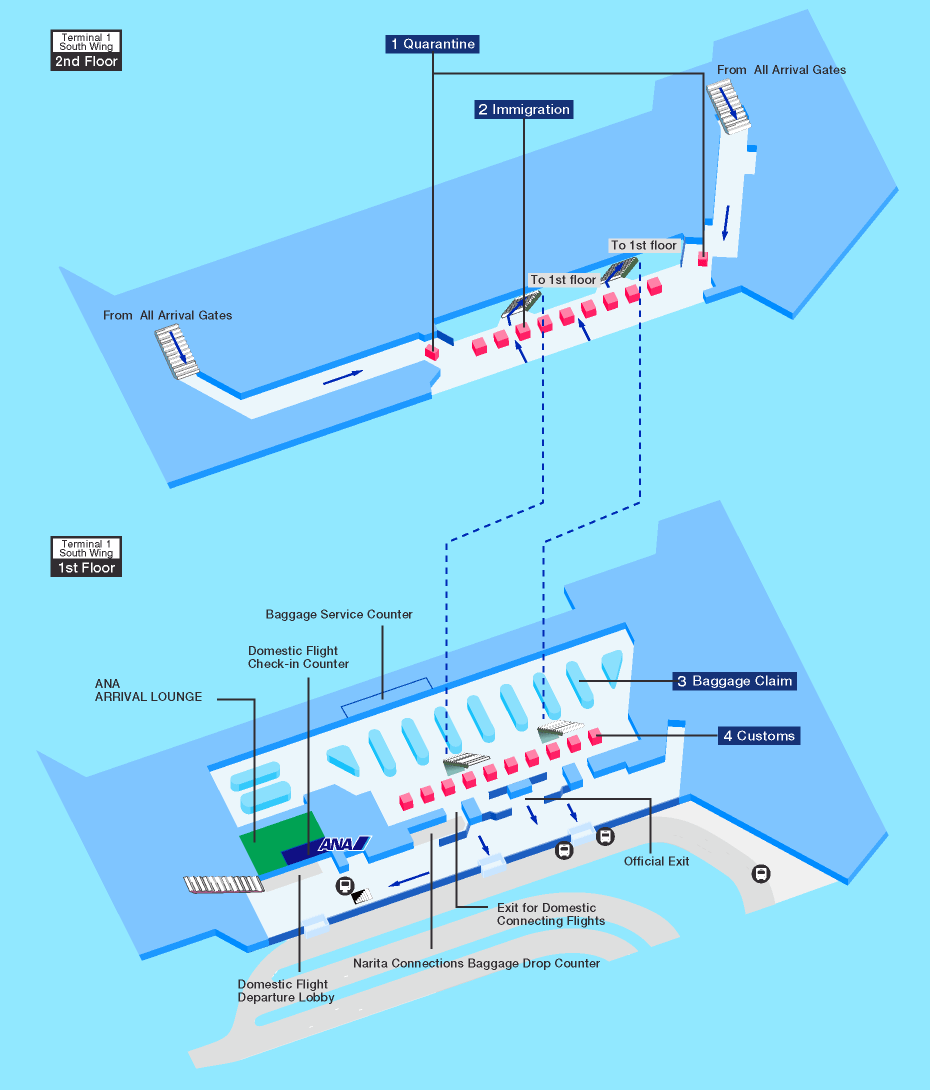
Upon coming down from the arrival gate to the 2nd floor of the South Wing of Terminal 1, there are quarantine booths, immigration booths, and stairs down to the 1st floor. On the 1st floor, there is the baggage claim area and a baggage service counter. After passing through customs and leaving through the exit for domestic connecting flights, there are domestic flight check-in counters, the Narita Connections Baggage Drop Counter, the ANA ARRIVAL LOUNGE, and the domestic flight departures lobby. Leave the building through the general exit to get to the bus stops.
Immigration
Please present your passport and Immigration card.
Customs
Customers with goods to declare must turn in their Customs Declaration forms.
Departure Terminal
-
Check-in
-
Security Check
-
Immigration
-
Elevator
-
Information
-
Currency exchange
-
ATM
-
Smoking Room
-
Railway
-
Monorail
-
Toilet
-
Lactation room
-
Telephone
-
Coin Lockers
-
Bus
-
Taxi
-
Boat
-
Passengers departing from Narita International Airport
Airport Map Information
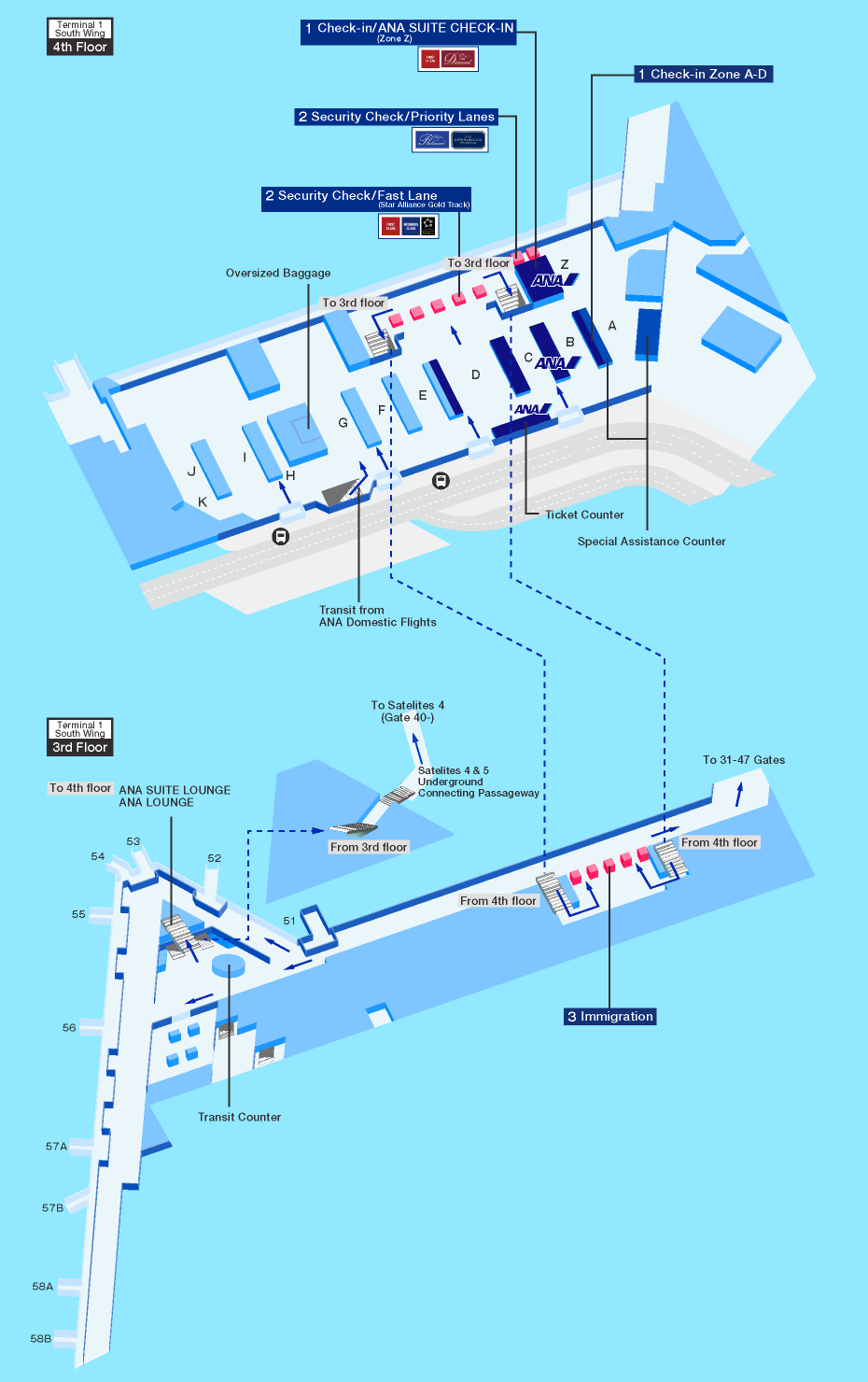
On the 4th floor of the South Wing of Terminal 1, there are check-in counters. ANA counters are located in Zones B to D. The special assistance counter is located adjacent to Zone A. The ticketing counter is located adjacent to Zone D. In Zone H, there is an inspection counter for oversized baggage. In Zone Z, there is ANA SUITE CHECK-IN, which is available exclusively to First Class passengers on ANA-operated flights and ANA Diamond Service Members. After check-in, the applicable passengers can proceed directly to the adjacent security checkpoint.
There are 2 different priority security lanes, the Priority Lane and the Star Alliance Gold Track.
After passing through security, there are 2 staircases down to the 3rd floor. On the 3rd floor, there are immigration booths. After passing through immigration, you will find Gates 51-56, 57AB and 58AB, as well as a walkway to Gates 31-47. There is also a transit counter near Gate 51 and stairs to the ANA Lounge and ANA SUITE LOUNGE on the 4th floor, as well as stairs to the underground passageway connecting to Satellites 4 and 5.
Boarding Procedures
- Zone B: Passengers to Europe/Asia/Oceania
- Zone C/D: Passengers to the United States/Mexico
Passengers who need special assistance, please proceed to the counter of each zone according to your destination.
Security Check Priority Lanes
The following customers can use the priority security lanes:
- ANA Platinum Service Members
- ANA Super Flyers Card Members
The following customers can use the Star Alliance Gold Track (after showing their boarding pass):
- Star Alliance Gold members
- Please show your membership status card in addition to your boarding pass.
- First Class customers
- Business Class
For more information, see ANA Duty Free Shop.
Check-In
- Please present your passport and boarding pass.
- Since the boarding gate check-in counters might be subject to change; please check at the airport to the day of departure.
- Please check-in at the counter of the operating airline when taking a code share flight operated by another airline. For details on code-share flights, please go here.
- See ANA International Airport Check-In Counter Opening Times.
Transit
Airport Map Information
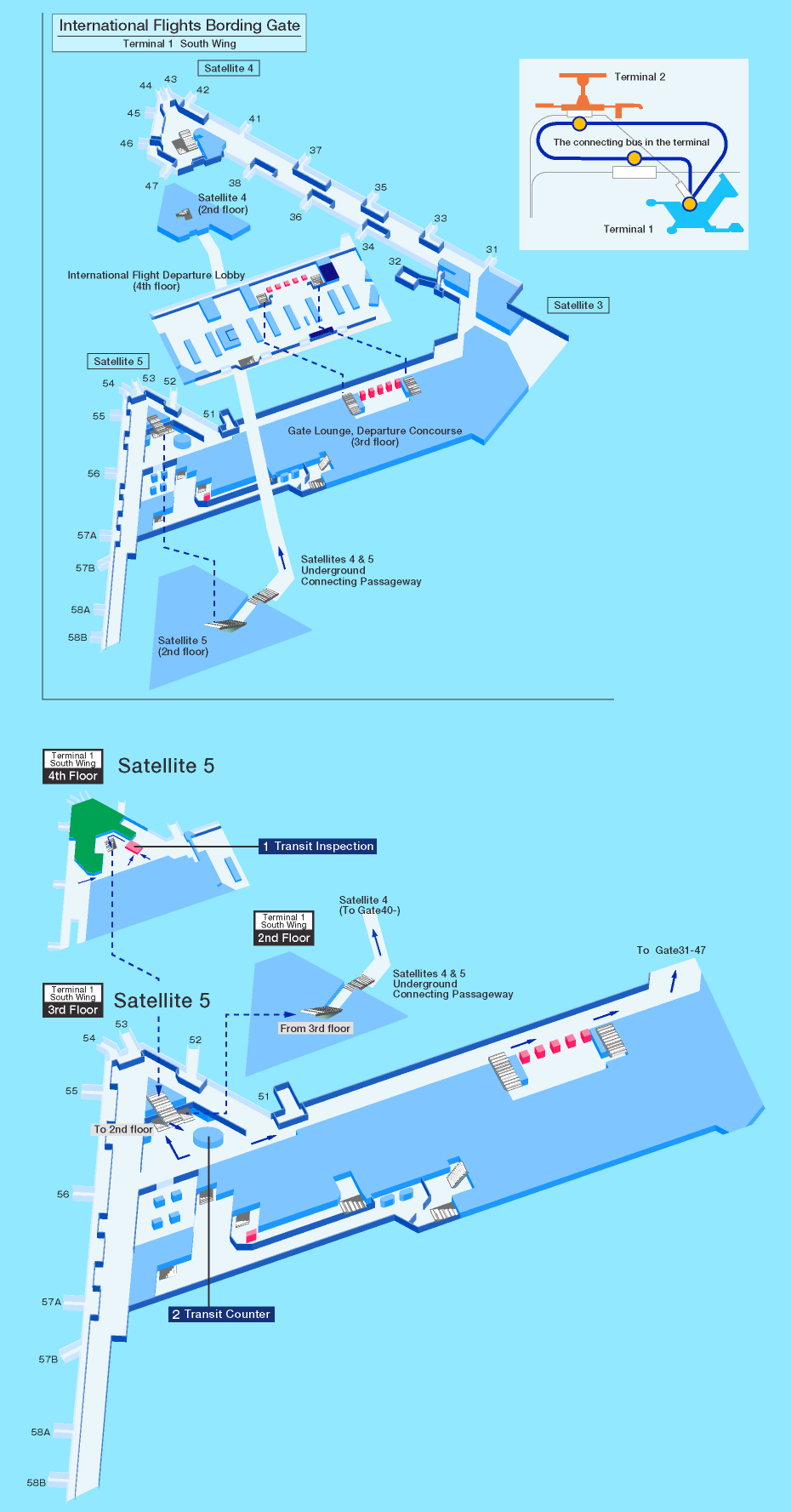
This is a map of the boarding gates for international flights. In Satellite 5 on the 4th floor of the South Wing of Terminal 1, there is a security checkpoint for connecting passengers. After passing through this, there is a staircase going down to the 3rd floor. On the 3rd floor, there is a transit counter. After passing by this, there are Gates 51-56, 57AB and 58AB, as well as a walkway to Gates 31-47 and stairs down to the 2nd floor. On the 2nd floor, there are stairs down to the underground passageway for Satellites 4 and 5, which continues onto Gates 41-47 in Satellite 4. Proceed through the passageway to reach Satellite 4. On the 3rd floor, there is the gate lounge and the departure concourse. Passengers can use the shuttle bus to connect between Terminal 1 and Terminal 2.
International Flights
Terminal 1 transits:
Pass through the transit inspection in the arrival gate area on the 4th floor and then proceed to the departure concourse on the 3rd floor.
If you have not completed the boarding procedures for your next flight, pass through the transit inspection and then go to the transit counter on the 3rd floor.
- *If you have already completed the boarding procedures, please proceed directly to the boarding gate for your next flight.
To move between Satellites 4 and 5, please use the underground passageway.
Terminal 2 transits:
Please use the shuttle bus to move between terminals.
International and Domestic Flights
-
Passengers connecting from international flights to domestic flights
-
 Passengers connecting from domestic flights to international flights
Airport Map Information
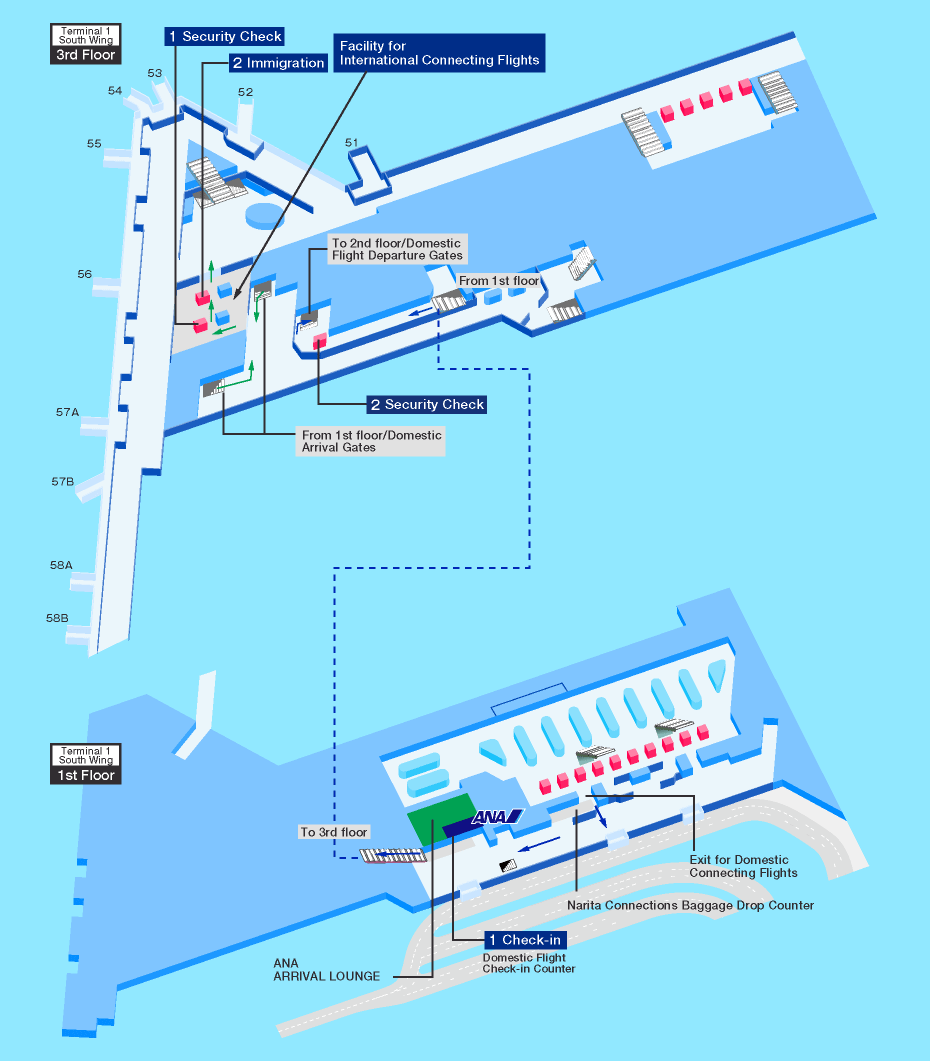
On the 1st floor of the South Wing of Terminal 1, there is the exit for passengers connecting to domestic flights and the Narita Connections Baggage Drop Counter. Past these, there are ANA domestic check-in and ticketing counters and the ANA ARRIVAL LOUNGE. Next to this is a staircase up to the 3rd floor. After passing through security, there are stairs down to the 2nd floor for the departure gates for domestic flights. On the 3rd floor, there are facilities for international connecting flights for passengers connecting from domestic to international flights. Passengers connecting from a domestic flight to an international flight departing from the South Wing of Terminal 1 should go through security and immigration and then proceed to the departure gate for their international flight.
Transit from international flights to domestic flights:
- When arriving at the South Wing and connecting to an ANA domestic flight at Narita, please complete the arrival procedures, and then proceed to the exit for passengers connecting to domestic flights to check in your baggage at the Narita Connections Baggage Drop Counter. When arriving at the North Wing, please complete the arrival procedures and then proceed to the domestic flights counter in the South Wing.
- When connecting to another airline’s domestic flight at Narita Airport, please complete the arrival procedures and then proceed to Terminal 2 via a shuttle bus from the bus stop on the 1st floor.
- When connecting to a domestic flight at Haneda Airport, please complete the arrival procedures, and then pass through the general exit to go to Haneda Airport.
- *If you check in baggage at your departure airport outside Japan, you will need to pick it up regardless of the destination indicated on your baggage tag. Furthermore, after passing through customs, you will need to check your baggage in again at a counter for domestic flights. Please take care not to forget to pick up your baggage.
Transit from domestic flights to international flights (Terminal 1):
- If you are connecting to an international flight (a flight departing from the South Wing of Terminal 1) at Narita Airport and you have already completed check-in and baggage check-in for that flight, please exit through the arrival gate for your domestic flight and proceed to the security checkpoint for connecting flights to undergo baggage and immigration inspections. After undergoing these inspections, please proceed to the departure gate for your international flight.
- If you are connecting to an international flight (a flight departing from the North Wing of Terminal 1) at Narita Airport, please proceed from the arrival lobby for domestic flights to the 4th floor of the North Wing.
Transit from domestic flights to international flights (Terminal 2):
- If you are connecting to an international flight (a flight departing from Terminal 2) at Narita Airport, please complete the arrival procedures and then proceed to Terminal 2 via a shuttle bus from the bus stop on the 1st floor.
Lounge
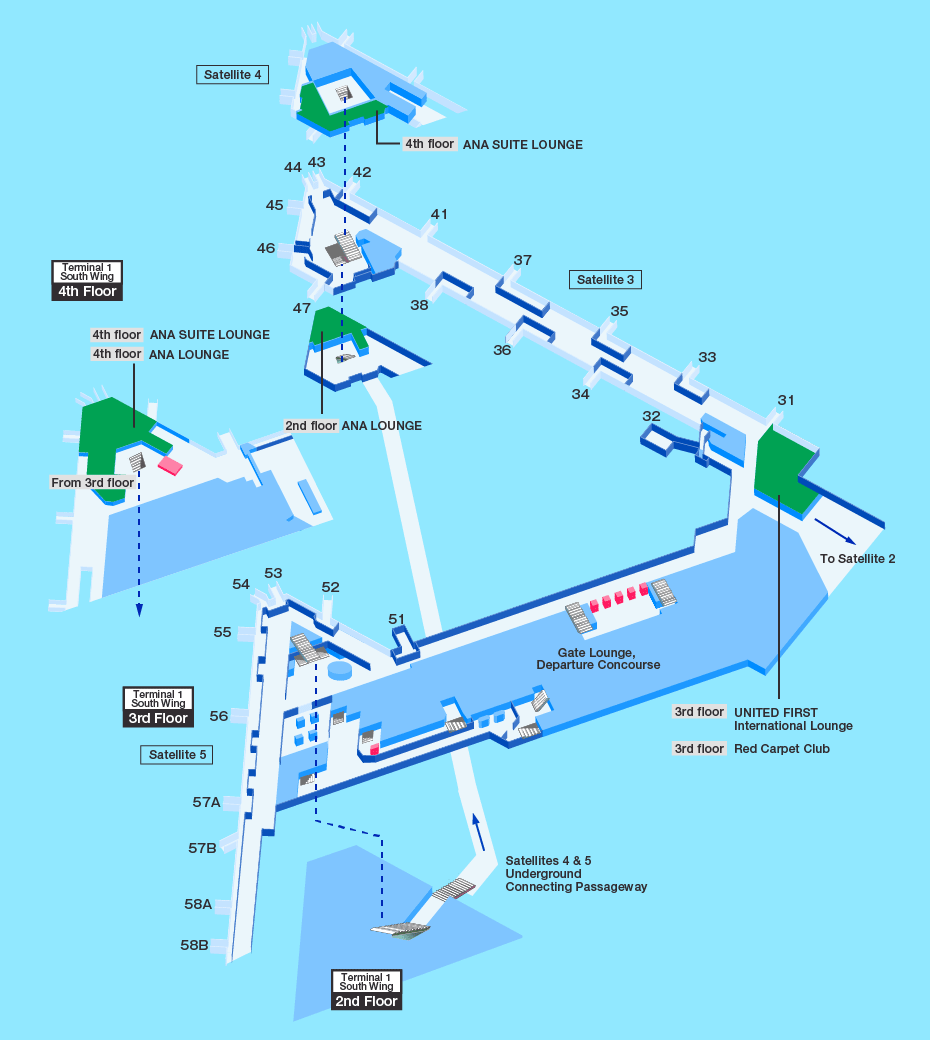
Airport Map Information
Learn more about the Airport Lounge.
This map shows where the lounges are located. On the 4th floor of Satellite 5 in the South Wing of Terminal 1, there is the ANA Lounge and ANA SUITE LOUNGE. In Satellite 4, there is the ANA Lounge on the 2nd floor and the ANA SUITE LOUNGE on the 4th floor. On the 3rd floor of Satellite 3 between Gate 31 and the gate lounge and departure concourse, there is the United Global First Lounge and United Club Lounge.
City Information on Tokyo (Narita)
Tokyo is the capital of Japan and has a population of 14,043,239 (as of August 1, 2021), making it the largest city in Japan. Located almost in the center of the Japanese archipelago, with an area of 2,193 square kilometers, it may be the most populous city in Japan but its land area is the third smallest of all the prefectures and cities in Japan. With a long terrain from east to west, many companies and commercial facilities are located in Shinjuku Ward and Shibuya Ward on the east side of Tokyo, and the world's most advanced urban area is expanding. On the other hand, the Tama area on the west side continues to grow as a commuter town due to the convenience of being able to reach the city center in one hour by train. In addition, an abundance of nature such as mountains and lakes remains in Okutama. Furthermore, the Izu Islands (Oshima, Niijima, Shikinejima, etc.) further out in the Pacific Ocean also belong to Tokyo. The Ogasawara Islands, which were registered as a UNESCO World Natural Heritage Site in June 2011, are also part of Tokyo, and have a unique ecosystem and culture.Although considered the air gateway to Japan, Narita Airport is actually located in Chiba prefecture. Travelers can reach the center of Tokyo in a minimum of 36 minutes by train. Chiba prefecture is located next to Tokyo, so it has good transportation access and is a place visited by many foreign tourists. The most popular destination there is Tokyo Disney Resort in Urayasu City, where you can enjoy an extraordinary fantasy world. Within the Tokyo Disney Resort, there are theme parks such as Tokyo Disneyland with its iconic Cinderella Castle, the sea-themed Tokyo Disney Sea, and official hotels such as the Disney Ambassador Hotel. There is also a large commercial complex, Ikspiari, where you can enjoy shopping and movies and a wealth of other entertainment activities. There are so many things to do there that you will need more than just one day. It is one of the must-see tourist spots when visiting Japan. There is also a direct limousine bus from Narita Airport to Tokyo Disney Resort, so you can enter Japan and go straight to the resort. In addition, Naritasan Shinshoji Temple, which is about 10 minutes by train from Narita Airport, is one of the top temples in the annual Hatsumode ranking. Immediately after getting off at the station, you will see an 800-meter approach to the temple. There are restaurants and souvenir shops on the sides of this approach, and you can enjoy the quaint Japanese scenery. Also, as you walk along this approach, your nose will be tantalized by the scent of sweet and spicy unagi being grilled. Unagi, or eel, is a specialty of Naritasan, and there are many eel specialty shops lined up along the approach. If you keep following the approach, you will arrive at Naritasan Shinshoji Temple. The temple was founded in 940 AD, and since its opening, the temple has been following Ogoma prayer every day to pray for the fulfillment of worshipers' worries and wishes. It has become a popular tourist spot, ranking highly on the popular word-of-mouth site TripAdvisor. Chiba has many other attractions where you can enjoy the nature of the four seasons and interact with animals, such as Funabashi Andersen Park, as well as Mother Farm, where you can experience animal events and fruit picking.
In addition to the standard sightseeing spots, please choose a spot that suits the purpose of your trip so you can enjoy a fulfilling trip to Japan.
From Narita I nternational Airpot (NRT) to Central Tokyo
Train
- Narita Express
-
Narita Airport Station (Terminal 1) / Airport Terminal 2 Station (Terminals 2 and 3) to Tokyo Station
Required Time : About 1 hour
Fare : Ordinary cars: 3,070 yen, Green Cars: 4,640 yen
Hours : 7:43 a.m.-9:44 p.m.Narita Airport Station (Terminal 1) / Airport Terminal 2 Station (Terminals 2 and 3) to Shinjuku Station
Required Time : About 1 hour 30 minutes
Fare : Ordinary cars: 3,250 yen, Green Cars: 4,820 yen
Hours : 7:43 a.m.-9:44 p.m. - Skyliner + JR
-
Narita Airport Station (Terminal 1) / Airport Terminal 2 Station (Terminals 2 and 3) to Nippori Station to Tokyo Station
Required Time : About 1 hour
Fare : 2,680 yen
Hours : Skyliner 7:26 a.m.-11:20 p.m., Saturdays,Sundays and Holidays 7:29 a.m.-11:20 p.m.
Express Bus
Narita Airport Station (Terminal 1) / Airport Terminal 2 Station (Terminals 2 and 3) to Tokyo Station
- Air Transport Service Company (Airport Limousine)
-
Required Time : About 80 to 100 minutes (depending on traffic)
Fare : 2,800 yen
Hours : 7:15 a.m.-10:15 p.m.* Only TCAT departures/arrivals, no departures/arrivals at Tokyo Station.
- Airport Bus TYO-NRT
-
Required Time : About 65 to 100 minutes (depending on traffic)
Fare : 1,300 yen - 2,600 yen
Hours : 7:30 a.m.-10:45 p.m.
Narita Airport Station (Terminal 1) / Airport Terminal 2 Station (Terminals 2 and 3) to Shinjuku Station (Shinjuku Expressway Bus Terminal/Shinjuku Station West Gate)
- Air Transport Service Company
-
Required Time : About 135 to 145 minutes (depending on traffic)
Fare : 3,200 yen
Hours : 7:50 a.m.-10:15 p.m.
Taxi
Taxi Stand : Terminal 1 (first floor), Stand #15, Terminal 2 (first floor), Stands #30 and #31A, Terminal 3 (first floor), Terminal 3 designated taxi stand
Narita Airport Station (Terminal 1)/Airport Terminal 2 Station (Termi-nals 2 and 3) to Tokyo Station
Required Time : About 60 to 90 minutes (depending on traffic)
Approximate Fare : Via Keiyō Road: fixed fare taxi 24,500 yen, via Bayshore Route: fixed fare taxi 26,000 yen
Hours : 24 hours
Narita Airport Station (Terminal 1)/Airport Terminal 2 Station (Termi-nals 2 and 3) to Shinjuku Station/Shibuya Station
Required Time : About 90 to 120 minutes (depending on traffic)
Approximate Fare : Via Keiyō Road: fixed fare taxi 26,500 yen, via Bayshore Route: fixed fare taxi 27,500 yen
Hours : 24 hours
Instructions for Narita International Airport (International Flights)
Busy Periods
- Airports may be very crowded during long public holidays in Japan such as the year-end/New Year period, Golden Week and during the Bon Festival.
- Please arrive at the airport with adequate time to spare.
- Nearby roads may be very congested and parking facilities may operate at full capacity during the period above.
- We recommend using public transportation. When traveling to the airport by car, please check the availability status of the parking facilities at the relevant airport.
- Reminder: You can check-in online 24 hours before your departure to avoid check-in at the airport.
See below for approximate time required for procedures during busy periods. Note: Time limits may be in place at security checkpoints during busy periods.
| Check-in Procedure | Congested Periods | Approximate Required Time |
|---|---|---|
| Baggage check-in | 4 p.m. to 6 p.m. | 15-20 minutes |
| Security | 4 p.m. to 6 p.m. | 20-30 minutes |
Facility Charges for Domestic Routes
There are Passenger Facility Charges (PFC) for domestic routes at Narita International Airport. Note: When flight tickets are purchased, the fare will include an airport fee. For detail on fees, please visit the Narita International airport website and/or view this PDF (Passenger Service Facility Charges after Opening of Terminal 3).
ANA flights use Terminal 1 and the fees are outlined below.
| Applicable Charges (Handling of International Flight Tickets) | Adults (12 years or older) | Children (2-12 years old) |
|---|---|---|
| Japan Domestic Routes arriving or departing at Narita International Airport | 440JPY | 220JPY |
Security Interview for Passengers Traveling to U.S.
Due to Transportation Security Administration (TSA) security requirements, security questioning is required at the Narita airports for all passengers traveling to the USA. Thank you for your kind understanding and cooperation.
Hand Baggage and Unaccompanied Baggage
- All passengers entering Japan are required to submit a Customs Declaration Form for hand baggage and unaccompanied baggage to the Customs Officer.
- Please note that if a passenger does not submit the Customs Declaration Form, the Customs inspection may take some time, and the passenger may not be permitted to take their baggage into Japan.
- The Customs Declaration Form is available for printing in advance (A4 size) from the Japan Customs website.
- For details, see the Japan Customs website.
Immigration Procedure
As part of efforts to combat terrorism, anti-terror measures have been put in place to use the personally identifying information provided to Immigration. Under a revised section of the Immigration Control and Refugee Recognition Act, foreign nationals will now have their fingerprints and a photograph taken.
Exempt Individuals
The following foreign nationals entering (or re-entering) Japan do not have to get their photo or fingerprints taken:
- Special permanent residents
- Children under age 16
- Persons seeking to conduct activities that apply under a “diplomacy” or “official business” visa status
- Persons invited by the head of a national administrative body
- Persons prescribed by decree of the Ministry of Justice in accordance with 3 or 4
Immigration Procedure Flow
- Submit passport and Embarkation Card For Reentrant (ED card) to the Immigration Officer.
- After receiving instruction from the Immigration Officer, place both index fingers on the fingerprint reader, while your fingerprint information is read electromagnetically.
- The camera above the fingerprint reader will take your photograph.
- You will be interviewed by the Immigration Officer.
- The examination is over once the Immigration Officer returns your passport and other documents.
Important Notice
- Foreign nationals who refuse to have their fingerprints or photograph taken will be refused entry to Japan, and ordered to leave.
- Incomplete ED cards may result in extremely long Immigration processing times, so please ensure you do not miss any items on the ED card.
- For more details, see the Japan Ministry of Justice website.
Quarantine
Note: All customers arriving from Southeast Asia must submit a health questionnaire.
Plant Protection Act
When bringing plants into Japan, it is legally required to submit a Phytosanitary certificate issued by the government of the exporting country. Based on the Plant Protection Act, you will have to undergo import inspection and, if you don’t have these Phytosanitary certificates, the plants will be disposed. For the latest information on the plant Quarantine program, please refer to the Ministry of Agriculture, Forestry and Fisheries - Plant Protection Station website.
Note: Plants are defined as fruits, vegetables, cereals, cut or dry flowers, seeds, or seedlings. Any violations might result in legal penalties (e.g., three-year jail sentence and/or a maximum fine of one million yens).
Prohibited Imports
The following are examples of plants and/or plant-related items that cannot be brought into Japan:
- Mango
- Papaya
- Lychee
- Longan
- Blueberry
- Mangosteen
- Rambutan
- Guava
- Pitaya (dragon fruit)
- Cashew nut
- Lianwu
- Balsam pear
- Marrow bean
- Chili pepper
- Tomato
- Soil (including potted plant)
- Injurious insects that are harmful to plants
- Rice straw and unhulled rice (except for those brought in from the Korean Peninsula and Taiwan)
Plumeria Plants From Hawaiian Islands
As of May 24, 2017, it is prohibited to import Plumeria plants and cuttings from the Hawaiian Islands into Japan unless certain conditions are met.