


Traveling to and from Hanoi
On this page, you will find the information you need to easily make your way through Noi Bai International Airport to your destination.
Guide to Vietnam’s Noi Bai International Airport
Arrival and departure terminal maps and other information for navigating Vietnam’s Noi Bai International Airport.

Arrival Terminal
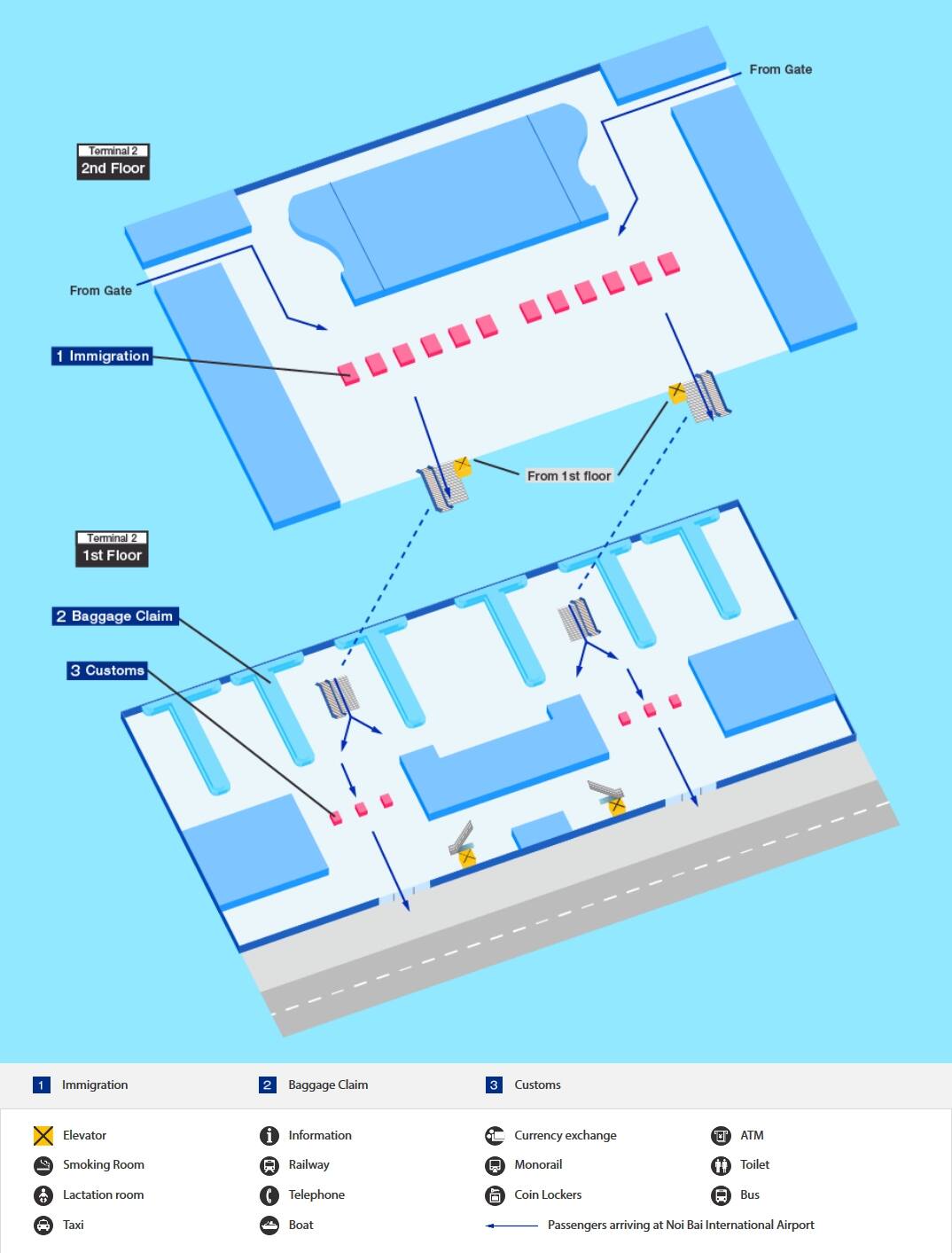
Immigration
Please present your passport.
Security Check
Security check for carry-on luggage and checked in luggage may be executed by the instruction of airport staff.
Departure Terminal

Airport Map Information
Get details on the airport lounge.
Check-In
- Since the boarding gate check-in counters might be subject to change, please check at the airport to the day of departure.
- See ANA International Airport Check-In Counter Opening Times.
Fast Track Security Screening
Some travelers for eligible for the Priority Passenger lane.
Eligible Travelers
- Business Class
- Diamond Service Members
- Platinum Service Members
- Super Flyers Members
- Star Alliance Gold Members
- Vietnam Airlines Platinum members
- Vietnam Airlines Gold members
Please show your boarding pass when using this service.
Transit
Transiting From ANA to Other Airlines (International Flight)
Please complete the check-in at the connecting counter for international flights. After check-in, please proceed to the boarding gate for international flights on the 3rd floor.
Transiting From ANA to Domestic Flights in Vietnam
After completing Immigration, go to the 1st floor and use the shuttle bus to proceed to the domestic terminal (Terminal 1).
Hanoi
On October 31st, 2019 (JST) current information.
Furthermore, the details under “Visa” and “Passport” are for Japanese nationals.
This information is likely to change suddenly, so please contact the relevant official authority (e.g., embassy) for the latest information.
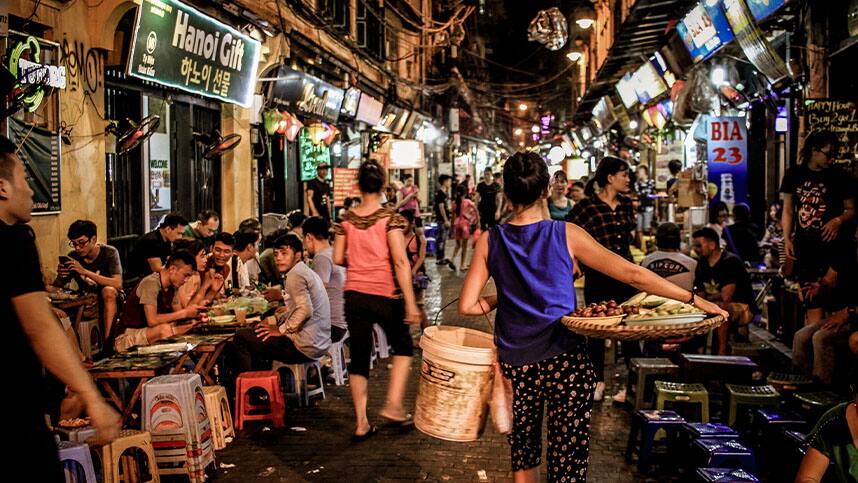
Vietnam
Official Languages: Vietnamese
Currency: dong (VND)
Time Zone: UTC +7 (Indochina Time)
Traveling to Vietnam
Whether you’re connecting at the airport or will be exploring what this beautiful country has to offer, you’ll find all the helpful tips you need to know on this page—including the current exchange rate, climate information and more. For detailed country information, please visit the embassy’s website.
Immigration and Visa (For Japanese Nationals Only)
Visa
Japanese citizens with a passport that is valid for at least six months from the date of entry and a ticket for leaving Vietnam can stay for up to 15 days without a visa.
A visa is required for stays of 16 days or longer, if you do not have an air ticket for leaving Vietnam (for example, you plan on departing by land), or if you will re-enter Vietnam within 30 days of leaving the country.Visas can be obtained at the embassy or consulate of the Socialist Republic of Vietnam. You can stay for one month with a regular tourist visa (single visa).
Passport
Your passport must be valid for at least six months from the time of obtaining a visa (or upon entry if you do not have a visa).
- * Visa, passport, and other information is subject to change without notice. Be sure to check with the Embassy, Consulate, or travel agency.
Note for travel to Vietnam
During the Immigration inspection, you must present your ticket for return or onward travel. When traveling with an e-ticket, you must present an e-ticket itinerary receipt.
- * Note that it is not acceptable to simply present an e-ticket on a computer or mobile device.
Quarantine
When visiting from Japan, it is prohibited to bring the following items into Vietnam.
- a. Plants (including seeds), plant products, fruit
- b. Mushrooms (excluding pickled, canned, frozen, or fermented)
- c. Silkworms, cocoons
- d. Insects, fungi, bacteria, viruses
- e. Animal processed products (raw foods)
Customs
Bringing in e-cigarettes
As of December 2019, there are no regulations for bringing it in the country.
For bringing and possession of tax-free cigarettes
- Tobacco: 200 cigarettes, 20 cigars, 250g for cut tobacco
- Liquor: 2L of liquor containing less than 22% alcohol, or 1.5L of liquor containing 22% or more alcohol
Time difference and Daylight Saving Time
Time difference
Japan is 2 hours ahead of Hanoi (Vietnam). (It is 10AM in Hanoi when it is noon in Japan.) Vietnam does not have daylight saving in the summer months.
Climate
Climate
The north of Vietnam, centered on Hanoi, is marked by a subtropical climate, and has some seasonal variations.
The hottest part of the year is from May to the end of October. In particular, the temperature often exceeds 30°C from June to August, with humidity reaching 90%. During this season, the temperature stays high during the night. It is also this season that sees high amounts of rainfall, with short but heavy squalls on an-almost daily basis. Carrying an umbrella or rain coat is essential whenever you head outside.
On the other hand, the weather stays relatively dry and comfortable from November to April. Hanoi is often cloudy from January to April, sometimes with drizzly rain falling throughout the day. The overnight low temperature may drop down to 7 to 8°C even within Hanoi city, so it is essential to have some warm gear such as a down jacket. If there is sunshine, the temperature will climb to a level where short sleeves are appropriate. Note that such rapid changes in temperature may affect your physical condition.


Currency and Exchange Rate, Tax, Currency exchange, Tip
Currency and Exchange Rate
Banknotes come in 12 denominations: 100, 200, 500, 1000, 2000, 5000, 10,000, 20,000, 50,000, 100,000, 200,000, and 500,000. The 100 and 200 dong notes are not widely circulated. Coins come in five denominations: 200, 500, 1000, 2000, and 5000 dong. These are no longer in circulation. In addition, though the US dollar is also circulated, price displays and payment/acceptance of foreign currency has been restricted since early 2012, and gradually its circulation is declining.
JPY1 is approx. VND216
US$1 is approx. VND23195
VND1 is approx. JPY0.004 (VND1000 is approx. JPY4)
(As of October 2019)

The banknotes have many digits and similar pictures, so be careful not to mix them up. Coins are hardly ever in use.
Tax
Basically, a 10% to 20% value added tax (VAT) is imposed, but in reality it is usually not imposed on shopping and payments at the tourist level. Travelers pay VAT at mid/high class hotels and upscale restaurants. In July 2014, a value-added tax (VAT) refund system was put into place. There are VAT refund counters at the airports and terminals that serve international flights where it is possible to receive refund if procedures are followed, so we recommend that you acquire an understanding of the system before using it.
Tip
Vietnam does not have a custom of tipping, so basically it is not necessary.
- Restaurants: Not required in restaurants other than upscale restaurants. Even in upscale restaurants, it is unnecessary when a service charge is added.
- Hotels: Tip bellhops and room service approx. VND10000 to VND20000.
- Tour guide and driver: For a private tour, the tip is about 50,000 to 100,000 dong per day. You don't need to give a tip on a cheap tour.
- Massage and spa: If you do give a tip, 50,000 to 100,000 dong is about right. In some cases the tip and/or service fee is included in the tour charge, so check beforehand.
- Taxies: Not necessary.
Voltage and plug
Voltage
Voltage is almost always 220V, but in rare cases it is 110V. The cycle is 50Hz. Many plugs are a combination of Type A and Type C. There are Type A, Type C, and in rare instances, Type SE and Type BF plugs. Using 100V electric products from Japan requires a transformer. Hotels of mid-level and above lend guests transformers. Even Japanese electric products that handle 100V to 240V can be used without a transformer, so read the instruction manual for electronic products you plan to use. However, be aware that even products that can handle 100V to 240V require a conversion adapter for the plug.
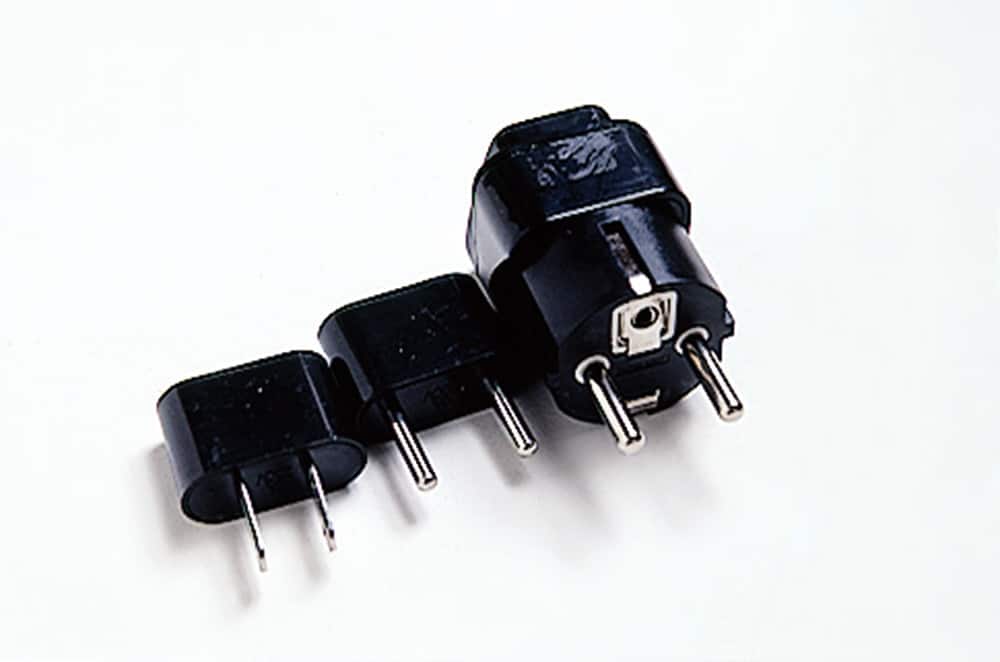
A conversion adapter for Type A, Type C, and Type SE
Video and DVD
Video and DVD
The DVD region code for Vietnam is 3, while it is 2 for Japan. DVDs cannot be viewed in Japan unless they are clearly marked “All code.” Be aware that bringing copied DVDs of animes and movies, etc. into Japan is not permitted.
Post Office Business Hours
Though it differs slightly for each post office, usually they are open from 7:00 to 21:00. Post offices are normally open on Sundays, too.
Postal Fees
Airmail to Japan costs VND16000 for a postcard, and VND15000 for sealed letters up to 20g. Parcel of parcels up to 1kg cost VND514000. An extra VND60500 is added for every 1kg thereafter.
Phone Call
Telephoning Japan from Vietnam
Ex. When calling Tokyo (03) 1234-5678:
- dial 00 (International telephone identification number)
- 81 (Country Code, Japan )
- 3 (Remove the first 0 for area codes)
- 1234-5678(Other parties telephone number)
Telephoning Vietnam from Japan
Ex. When calling Ho Chi Minh(08) 1234-5678:
- International Telephone Company No.
- 001 (KDDI)*1
- 0033 (NTT Communications) *1
- 0061 (SoftBank Telecom) *1
- 005345 (au Mobile) *2
- 009130 (NTT DoCoMo Mobile) *3
- 0046 (SoftBank Mobile)*4
- 010 (International Identification No.)
- 84 (Country Code, Vietnam)
- 8 (Area code, remove first 0)
- 1234-5678 (Other parties telephone number)
-
*1.Not required if you have an international registration with "My Line". See URL My Line(www.myline.org) for details.
-
*2.au does not require 005345.
-
*3.Pre-registration to World Wing is required for NTT DoCoMo. Does not require 009130.
-
*4.Call are possible without dialing 0046 from SoftBank.
Holiday / National holiday
2020
- January 1: New Year’s Day
- January 25 : Tet (Vietnamese New Year)
- April 2: Anniversary of the Death of Hung Vuong
- April 30: Reunification Day
- May 1: May Day
- September 2: National Day (Independence Day)
Language
Language
The official language is Vietnamese, which is written using characters called Quoc Ngu. English is often understood in places that cater to foreigners and travelers. Some stores also understand Japanese. In addition, some senior citizens understand French and Russian.
Business hours, etc
Business hours
Below are guidelines for general business hours, which differ by shop, restaurant, etc.
Banks
Mon. to Fri. 8:00 to 11:30, 13:00 to 16:00, closed on Sun., holidays. Some places are open on Sat. Currency can be exchanged during business hours.
Shops
8:00 to 21:00.
Restaurants
10:00 to 22:00, but some places open at 6:00 and close at 24:00. In addition, many upscale restaurants close for 2 to 3 hours between lunchtime and dinnertime.
Age Limit
Neither tobacco nor alcohol is regulated by law. Their consumption is socially acceptable around the age of 18.A license is required for driving motorcycles that are over 50 cc, and this rule applies to foreign nationals as well. Vietnam does not participate in international licensing and international drivers licenses are not valid in Vietnam.
Copyright (C) Globe-Trotter Media Partners Inc. All Rights Reserved.
Copyright (C) Diamond-Big Co., Ltd. All Rights Reserved.