


Traveling to and from the UK
On this page, you will find the information you need to easily make your way through London Heathrow airport to your destination.
Guide to England’s London Heathrow Airport
Arrival and departure terminal maps and other information for navigating through London Heathrow Airport.

Arrival Terminal
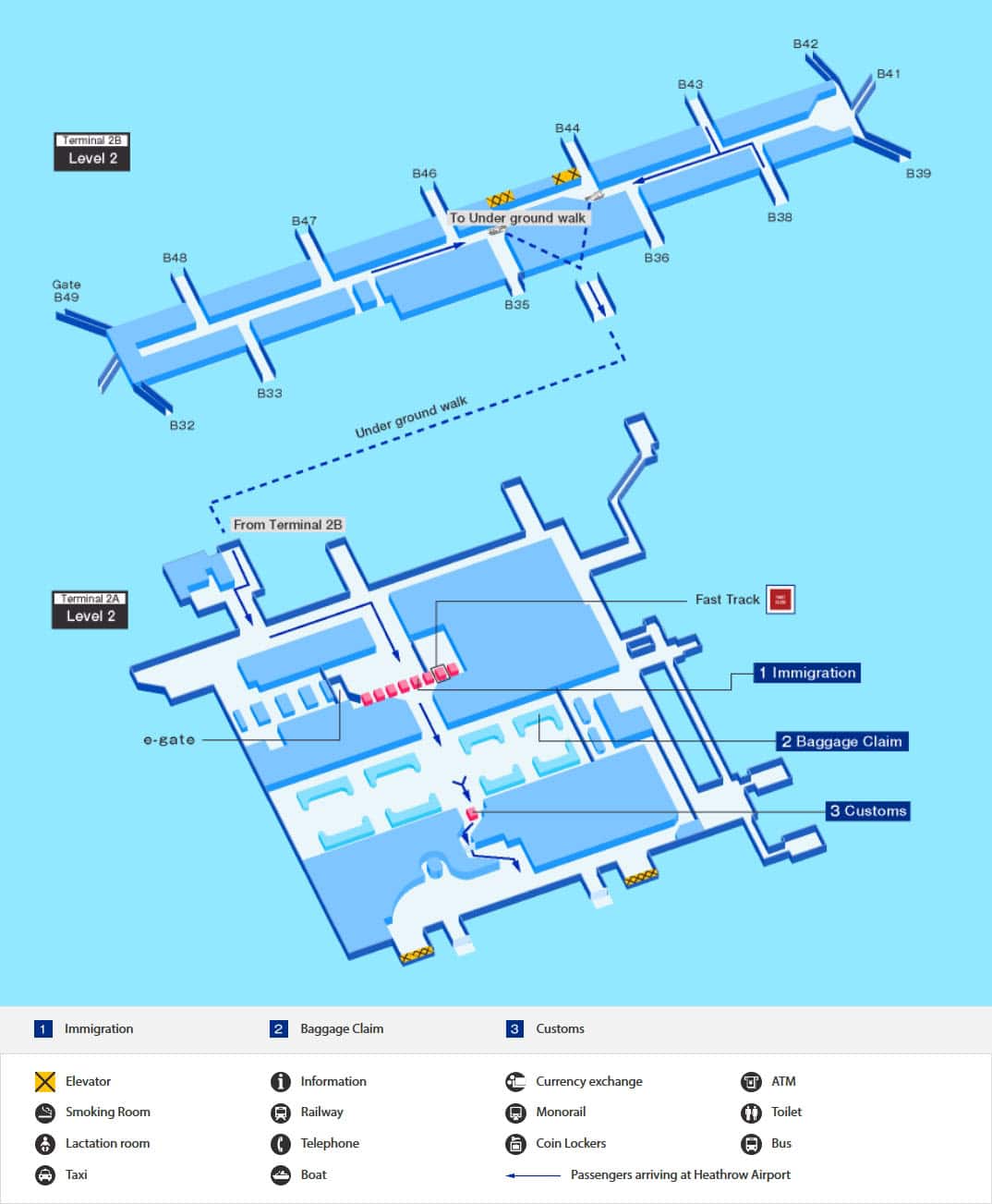
Airport Map Information
Flights operated by ANA group will arrive at Terminal 2.
Immigration
Please present your passport at the eGate (automatic gate).
- Passport holders from the United States, Canada, Australia, New Zealand, Japan, Singapore and South Korea are eligible to use automated gates at entry.
- Children under the age of 12, short-term students with a stay of 6 months or less, those with Tier 5 (Short-term workers creative and sports) visas, and those with other paid work visas need to proceed to the passport control.
- For more information, please visit the UK Border Force website.
Customs
Customers with goods to declare must turn in their Customs Declaration forms at Customs. Your luggage may be subject to inspection, regardless of whether you have products to declare or not. In this case, please follow the attendant's instructions.
Fast Track Immigration
First Class customers are eligible for Fast Track—please look for Fast Track signs. When using this lane, present the dedicated coupon distributed in the cabin. Note: The dedicated coupon is usable only in Terminal 2.
Minors Traveling Alone
A letter of consent is required for travelers under the age of 18 entering the UK without their parents. Get more details here (Minors Traveling Alone to the UK).
Departure Terminal

Airport Map Information
Flights operated by ANA group will depart from Terminal 2.
On level 5 of terminal 2A, there are elevators from the London Underground as well as Hotel Hoppa stops and taxi stands in front of the terminal. ANA check-in counters are located in Zone D. (Customers can check-in and print boarding passes and baggage tags at any self-service check-in machine in Zones A to D). After check-in, there are baggage drop off counters. Passengers using ANA flights should drop off their baggage at a counter in Zone D.
There also are VAT refund counters for items in carry-on and checked baggage respectively. After baggage drop, there is security and a priority security lane. The priority security lane is available only to First Class, Business Class and Star Alliance Gold members.
After passing through security, there are escalators and elevators down to level 4, where you can take underground passageways to level 2 of Terminal 2B. After passing through, there are elevators and escalators up to the United Club Lounge and the SilverKris Lounge Learn more about the Airport Lounges.
Check-In
- Since the boarding gate check-in counters might be subject to change, please check at the airport to the day of departure.
- See ANA International Airport Check-In Counter Opening Times.
- Please use the international flight self-service check-in machines to check-in (issue the boarding pass) and issue the luggage tags.
Baggage Check-In
Please attach the luggage tags issued by the self-service check-in machine to your luggage and proceed to the luggage counter at Zone D.
Fast Track Security Screening
Some customers are eligible for fast track security screening—please look for Gold Track signs.
Eligible Travelers:
- First class
- Business class
- Diamond service members
- Platinum service members
- Super Flyers members
- Star Alliance Gold members
Note: Please show your boarding pass when using this service. Star Alliance Gold Members are requested to present the Star Alliance Gold Status Card in addition to the boarding pass.
VAT refunds
A value-added tax (VAT) is applied to items purchased in the United Kingdom—as a visitor, you may be entitled to a refund of the VAT for 20%. Visitors may apply for the refund of the tax. When purchasing items, show your passport and have the shop process a Tax Refund Check. At the time of departure, show your purchase, your passport, boarding pass and Tax Refund Check to the Customs official at departure and have the check stamped.
Transit

From ANA to Other Airlines
ANA flights arrive at Terminal 2B. Immigration and check-in procedures are performed at Terminal 2A. Connecting passengers should take an escalator or elevator on level 2 of Terminal 2B down to Level B1, and then pass through the underground passageway toward Terminal 2A.
On level 2 of Terminal 2A, there is an escalator to Terminal 1 and an escalator to the stop for buses to Terminal 3, 4, and 5. Passengers should proceed toward the terminal for their connecting flight. Passengers connecting to flights departing from Terminal 2A or 2B should pass through the transfer security checkpoint and then take an escalator or elevator up to level 4 (departure floor) of Terminal 2A.
On level 4, there is the transfer area, self-service check-in machines, and transfer counters. Passengers connecting to Terminal 2A should proceed to the departure floor, while passengers connecting to Terminal 2B should proceed via the underground passageway to Terminal 2B.
From Other Airlines to ANA
On level 2 of Terminal 2A, there is the underground passageway from Terminal 2B, and escalators from the stop for buses to Terminal 3, 4, and 5. Pass through the transfer security checkpoint and take an escalator or elevator up to level 4 (departure floor) of Terminal 2A.
On level 4 of Terminal 2A, there is the transfer area, self-service check-in machines, a transfer counter, and an escalator and elevator from Terminal 1. Passengers connecting to an ANA flight should proceed via the underground passageway to the boarding gate in Terminal 2B.
Connecting from Other Airlines
- Passengers with no boarding pass should proceed to our transfer desk and check-in at the self-service check-in kiosk.
- Passengers with through checked baggage should contact us using the phone at our transfer desk as ANA needs to confirm the baggage detail(s).
- No staff is attending at transfer desk
London
On October 31st, 2019 (JST) current information.
Furthermore, the details under "Visa" and "Passport" are for Japanese nationals.
This information is likely to change suddenly, so please contact the relevant official authority (e.g., embassy) for the latest information.
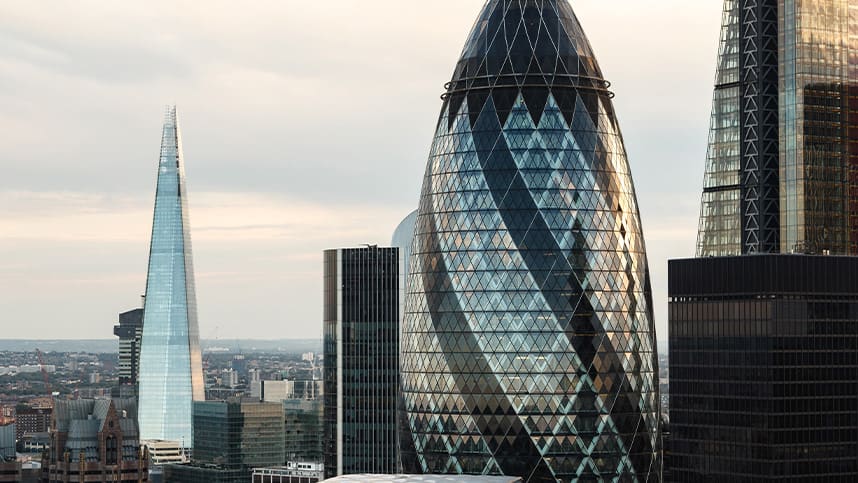
England
Official Language: English
Currency: Pound sterling (GBP)
Time Zone: UTC +1 (BST)
Travelling to England?
Whether you’re connecting at the airport or will be exploring what this beautiful country has to offer, you’ll find all the helpful tips you need to know on this page—including the current exchange rate, climate information and more. For detailed country information, please visit the embassy’s website.
Immigration and Visa (For Japanese Nationals Only)
Visa
Generally no visa is required for tourist visits of up to six months.
Passport
It is generally permissible to have a passport that is valid for the number of days of your stay, but it is preferable to have one that is valid for at least six months.
- * Visa, passport, and other information is subject to change without notice. Be sure to check with the Embassy, Consulate, or travel agency.
Quarantine
When visiting from Japan, it is prohibited to bring the following items into England.
- a. Meat, meat products, milk, dairy products
- b. Potatoes (all food, seeds, or plants), most plants
- c. Soil
- d. Endangered animals or plants and products made from them
- * Most fruits and vegetables (excluding potatoes) are permitted. However, they must be in hand luggage, they must be for personal use or for family or friends and not for sale, as well as they must show no signs of pests or disease. Some items are subject to permissible amount per person or are prohibited or restricted.
- * Marine products, eggs, and honey are allowed to bring into the country, with some exceptions, but there are conditions such as the allowable limit.
- * Food products that are brought in against the regulations will be confiscated. You may also be fined or prosecuted.
- * Many plants require a plant Quarantine certificate.
- * There are specific regulations and conditions for animals in addition to by species.
- * There may be other conditions or regulations in addition to the above.
- * The regulations may change if England leaves the EU.
Immigration Card
Landing cards are no longer in use as of May 2019. Visitors with Japanese IC passports who are 18 or older or are between 12 and 17 and are accompanied by an adult can use the automatic gates.
Customs
Bringing in e-cigarettes
There are no special restrictions for travelers bringing it in for personal use.
If you want to enter in less than 18 years of age
Entering the UK if you are under 18:Those under 18 who are unaccompanied or accompanied by one parent or another individual may have to present the following information when questioned by the Immigration officer before entering the UK. Although there is no required format, a document in English must be prepared by the individual in advance. The decision for entry is made by the Immigration officer, and some do not require such documentation.
- Travel purpose
- Address during your stay
- Estimated length of stay
- Name and relationship of the individual picking up the minor
- Name and contact information (e.g. phone number) of the individual picking up the minor
- Name and contact information (e.g. phone number) of the parents
- Consent from the parents
- Information about any accompanying individuals
- * This information is subject to change without notice. Be sure to check with the Embassy or travel agency.
For bringing and possession of tax-free cigarettes
- Tobacco: 200 cigarettes, 100 slender cigars, 50 regular-sized cigars, or 250g of cut tobacco (possession of combinations of the above is generally acceptable within the restrictions).
- Alcohol: 1L of liquors over 22% alcohol, 2L of alcoholic drinks up to 22% alcohol (e.g. sparkling liquor or sherry). Combinations of two or more types are allowed as long as the volume is within the restrictions. In addition to the above, 4L of table wine (not sparkling) and 16L of beer.
- Other: Goods equivalent to up to £390 per individual (including perfumes and gifts).
- * Those under 17 are prohibited from bringing in tobacco or alcohol.
Time difference and Daylight Saving Time
Time difference
There is a 9-hour time difference between Japan and London. Subtract 9 from the hour in Japan. In other words, 7:00 in Japan is 22:00 on the previous day in the UK.
This changes to an 8-hour difference during daylight saving time, which begins at 1:00 (2:00) at night on the last Sunday of March and ends at 1:00 (0:00) at night on the last Sunday of October.
Climate
Climate
Although the UK is much further north than Hokkaido, the cold is much more intense in winter in Japan. Most people think it rains often there, but the rainfall that is about a third of that of Japan during the rainy season is spread almost throughout the year.
The climate is marked by highly variable weather. The temperature changes rapidly even in a single day, for example with the sun shining brightly one minute, and a sudden downpour the next. Although it rarely rains all day long, it often rains for several hours a day. Do not forget your rain gear. It is best to carry a cardigan or light jacket with you, even in summer.

Temperatures in London and Tokyo

Precipitation in London and Tokyo
Currency and Exchange Rate, Tax, Currency exchange, Tip
Currency and Exchange Rate
The unit of currency is the pound (£), which is divided into pence (p). £1 is 100 p, JPY132.4 (as of October 2, 2019). There are four denominations of banknotes: £5, £10, £20, and £50 (Only Scotland and the Channel Islands have £1 notes.). In general, £50 notes are not often used. There are eight types of coins: 1 p, 2 p, 5 p, 10 p, 20 p, 50 p, £1, and £2.
Scotland, Northern Ireland, and other countries in the UK issue their own banknotes, but these can also be used in England. Note that banknotes issued by the Channel Islands, however, cannot be used in the UK. Also, Scotland and Northern Ireland currency cannot be exchanged in Japan and should be used or exchanged to British pounds as early as possible.

Currency in the UK
Tax
In the UK, a 20% value-added tax called "VAT" is applied to almost all products. Travelers can get this tax after service charges and other charges are deducted refunded if they do the paperwork. Incidentally, it is the tax paid when shopping that is refunded. Taxes paid for hotel and restaurant fees are not refunded. Have a form filled out at a shop with a "Tax Free Shop" sign and submit it to Customs when departing the UK to receive your refund.
Currency Exchange
- Exchanging money: Exchange money at a bank or place with a sign saying "Bureau de Change." These are often present in airports and in and around major train stations.
- Credit cards: A VISA, MasterCard, American Express, JCB, or other internationally-trusted credit card is a must. You can also withdraw cash from an ATM with a VISA or MasterCard.
Tip
Fees charged in places such as restaurants and hotels may include a service charge, so a tip is not always required. Refer to the following when providing a tip for good service. In addition.
- Taxis: Approx. 10 to 15% of the fare.
- Restaurants: Though it depends on the quality of the restaurant, in general, if there is no service charge, tip about 10 to 15%. Many places specify 12.5%. When paying by credit card, pay a tip by adding the amount to the total on the pay slip yourself.
- Hotels: About £1 each time for the bellhop or when asking for room service.
Voltage and plug
Voltage
Voltage is 220V to 240V with a frequency of 50Hz. Plugs are generally Type BF with three pins. Many electric products made for use in Japan cannot be used as is, and require a voltage converter.

Type BF
Video and DVD
Video and DVD
The DVD system in the UK (PAL) differs from that of Japan (NTSC), so a DVD and other media from the UK cannot be played on ordinary video players in Japan. If a DVD displays the same region code as Japan (2), then it can be played on a computer equipped with a DVD player as it is normally compatible with PAL output, but the DVD cannot be played on ordinary DVD players (it is possible if the machine is compatible with PAL).
Blu-ray system
The Blue Ray disc system in the UK (B) differs from that of Japan (A), so a Blue Ray disc from the UK cannot be played on ordinary Blue Ray disc players in Japan.
Post offices in the UK are called the Royal Mail. In recent years, post offices have been partnering with other businesses and often subcontract to convenience stores, stationery shops, and other businesses.
Hours
Generally 9:00-17:30 on weekdays, and 9:00-12:30 on Saturdays. They are closed on Sundays and holidays. Rural post offices may close for lunch.
Postal fees
Postcards and letters send by airmail to Japan cost £1.35 up to 10g and £2.30 up to 100g.
Phone Call
Telephoning Japan from England
Ex. When calling (03) 1234-5678 or (090) 01234-5678:
- dial 00 (International telephone ID Number)
- 81 (Country Code, Japan)
- 3 or 90 (Remove the first 0 for area codes and mobile telephone numbers)
- 1234-5678 (Other parties telephone No.)
Telephoning England from Japan
Ex. When calling London (020) 1234-5678:
- International Telephone Company No.
- 001 (KDDI)*1
- 0033 (NTT Communications) *1
- 0061 (SoftBank Telecom) *1
- 005345 (au Mobile) *2
- 009130 (NTT DoCoMo Mobile) *3
- 0046 (SoftBank Mobile)*4
- 010 (International Identification No.)
- 44 (Country Code, England)
- 20 (Remove the first 0 from telephone numbers)
- 1234-5678 (Other parties telephone No.)
-
*1.Not required if you have an international registration with "My Line" or "My Line Plus". See URL My Line/My Line Plus(www.myline.org) for details.
-
*2.au does not require 005345.
-
*3.Pre-registration to World Wing is required for NTT DoCoMo. Does not require 009130.
-
*4.Call are possible without dialing 0046 from SoftBank.
- * For the three cell phone carriers, hold down 0 until + appears, then add the country code and the phone number your wish to dial.
Holiday / National holiday
Holiday / National holiday
Many holidays are related to Christianity and you should note the holidays with dates that vary by year.
When public holidays fall on a Saturday or Sunday, there is a substitute holiday.
Some establishments close before and after Easter and from around Christmas to New Years, so it is best to get information in advance.
In particular, note that subways, buses, trains, and other public transportation do not run on the regular schedule from before Christmas to New Years.
The term "bank holiday" was coined in 1871 to refer to days when the bank was required by law to close. On bank holidays, banks and regular companies close, but most public facilities, public transportation, and stores remain open.
2020
- January 1: New Year's Day
- January 2: Bank Holiday (only Scotland)
- March 17 (March 18 is a substitute holiday): St. Patrick's Day (only Northern Ireland)
- April 10 to April 13: Easter Holidays
- May 4: Early May Bank Holiday
- May 25: Spring Bank Holiday
- July 12: Orangemen's Day (only Northern Ireland)
- August 3: Summer Bank Holiday (only Scotland)
- August 31: Summer Bank Holiday (without Scotland)
- November 30 (December 2 is a substitute holiday): St. Andrew's Day (only Scotland)
- December 25: Christmas Day
- December 26: Boxing Day
Language
Language
English, Welsh, Gaelic
Business hours, etc
Business hours
Below are guidelines for general business hours.
Banks
Hours vary widely by bank, but are generally 9:30 a.m. to 16:00, 16:30 p.m. weekdays. Some also open Saturdays in the morning only. They are closed on Saturday, Sundays and public holidays.
Department Stores/Shops
Monday to Saturday, 10:00 a.m. to 6:00 p.m. More and more shopping establishments are opening for just six hours on Sundays and public holidays. They are closed on Sundays and holidays. Nowadays, many are also open on Sundays.
Restaurants
Breakfast is from 9:00 to 11:00, lunch from 12:00 to 14:30, afternoon tea from 15:00 to 17:00, and dinner from 17:30 to 23:00 (roughly).
Pubs
11:00 to 23:00 on Mon. to Sat., 12:00 to 22:00 on Sun.
Embassy
Embassy of Japan in the UK
101-104 Piccadilly, London, W1J7JT
TEL 020-7465-6500
FAX 020-7491-9348
Age Limit
In the UK, you cannot purchase alcohol if you are under 18. When renting a vehicle, age restrictions vary with the car rental company and the type of vehicle, and a credit card is requested as ID.
Manners
When lining up (forming a "queue"), stand in one line even if there are multiple agents, and go to a free agent when you reach the front of the line. To hail a taxi or stop a bus, signal by sticking out your arm. Pay your taxi fare through the small window between the drivers seat and back passengers seats.When standing on escalators, stand on the right. The left side is for people to walk.
Smoking
Smoking is prohibited in all enclosed public spaces and restaurants (including pubs).
Copyright (C) Globe-Trotter Media Partners Inc. All Rights Reserved.
Copyright (C) Diamond-Big Co., Ltd. All Rights Reserved.